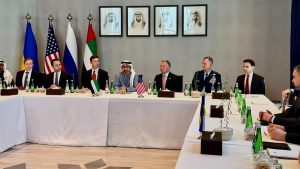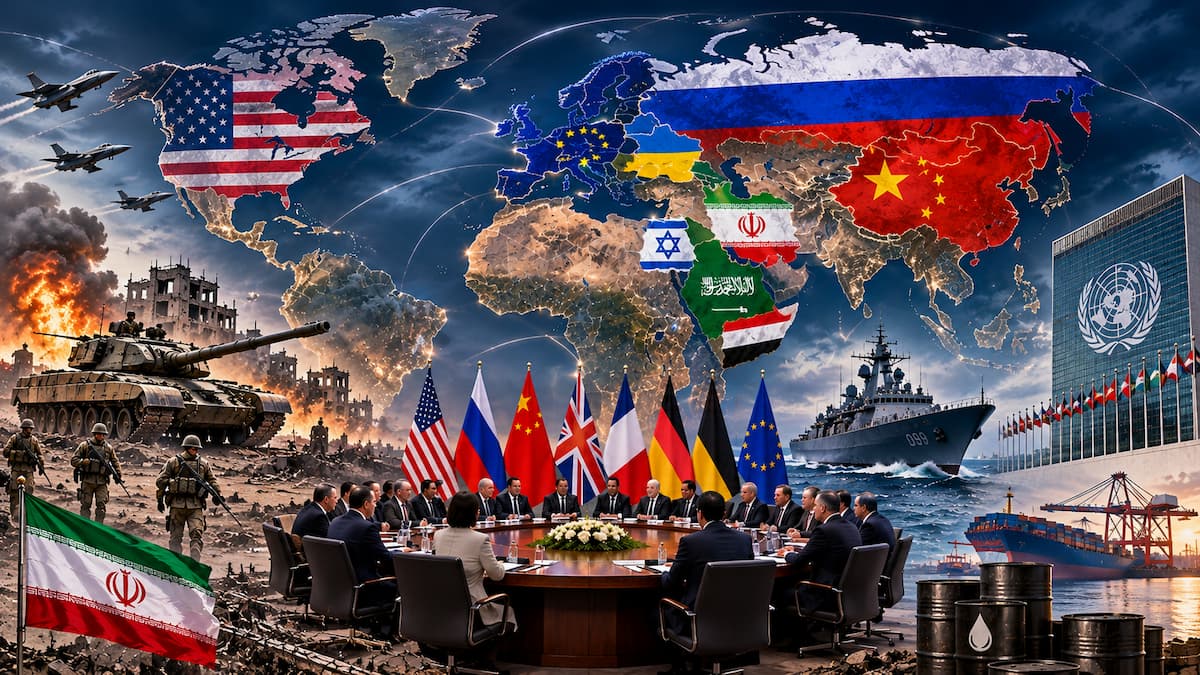
The ongoing conflicts in Ukraine and the Middle East highlight the growing limitations of military power and the increasing importance of diplomacy. Despite diplomatic efforts, the Abu Dhabi negotiations between Ukraine, Russia and the United States on 10–11 November 2026 failed to produce a meaningful breakthrough. While discussions on prisoner exchanges and further negotiations continued, fundamental disagreements over territorial control, NATO’s role and Europe’s future security architecture remained unresolved. Russia appears increasingly confident in translating its battlefield gains into political advantages, while Ukraine continues to seek security guarantees and territorial restoration.
Following the inconclusive talks, American representatives travelled to Moscow on 12 November to meet President Vladimir Putin. Washington appeared interested in finding a broader strategic understanding, potentially linking developments in Ukraine with the ongoing tensions involving Iran. However, Russia and Iran have little incentive to accommodate American objectives without securing political advantages of their own. Meanwhile, European leaders, particularly Finland’s President Alexander Stubb, face difficult decisions over their future relationship with Russia. Europe’s economic and political pressures make a prolonged confrontation increasingly difficult to sustain, highlighting the need for an inclusive European security arrangement.
The upcoming trilateral meeting between Donald Trump, Vladimir Putin and Xi Jinping in Shenzhen on 19 November, alongside the APEC summit, could prove significant for global strategic stability. Discussions may cover trade, nuclear security, economic cooperation and the escalating Gulf situation. At the same time, Yemen’s Houthi movement continues to demonstrate the effectiveness of asymmetric warfare. Its ability to threaten important maritime routes, particularly the Red Sea and Bab el-Mandeb, illustrates how relatively weaker actors can impose substantial costs on powerful military and economic states.
Washington now faces difficult choices regarding Iran: disengage and declare victory, launch another major military offensive, or consider the extremely dangerous possibility of nuclear escalation. Each option carries serious consequences. A military withdrawal without a negotiated settlement could leave unresolved regional tensions, while another offensive risks widening the conflict. Nuclear weapons would create a catastrophic international crisis rather than deliver a sustainable solution.
Beyond the immediate battlefield, the consequences could reshape the international order. Economic sanctions and military pressure have not necessarily translated into political submission, while growing cooperation among non-Western powers could accelerate the development of alternative financial systems, trade routes and economic partnerships. The dollar’s global dominance and Western-led financial institutions may gradually face greater competition as the world moves towards a more multipolar structure.
Israel, too, will face increasing pressure to reconsider its regional ambitions and pursue a sustainable political settlement, including a viable two-state solution with the Palestinians. Meanwhile, emerging trade and energy corridors connecting the Black Sea, Central Asia, the Caucasus and the Gulf could become important foundations for future international cooperation.
Ultimately, military superiority does not guarantee political victory, economic pressure does not ensure submission, and winning battles does not necessarily mean winning wars. The conflict may eventually end through diplomacy, but its consequences will continue to influence global politics, economics and security for years to come. The world emerging from this war may be more multipolar, competitive and strategically independent than the one that existed before it began.
“War is the unfolding of miscalculations.” — Barbara Tuchman