ISLAMABAD: Pakistan and Russia have agreed to strengthen their technological cooperation by exploring joint ventures, technology partnerships and pilot projects in artificial intelligence (AI), cybersecurity, cloud computing and other emerging sectors. The initiative aims to expand digital trade, encourage investment and create access to new international markets for businesses in both countries.
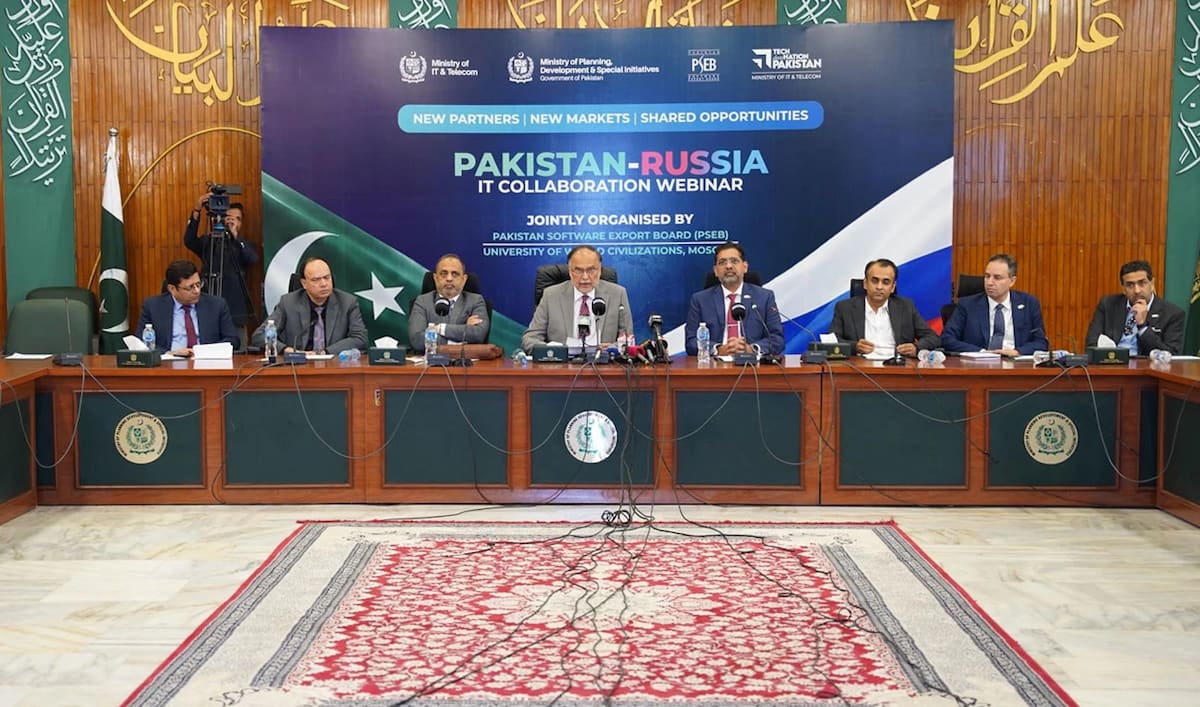
The agreement was discussed during the Pakistan-Russia IT Collaboration Webinar held on Thursday. Government representatives, industry associations and technology companies from both sides participated in the event to identify potential areas of cooperation and explore opportunities for joint business ventures.
Planning Minister Ahsan Iqbal, who attended the webinar as chief guest, emphasised the need for Pakistan and Russia to move beyond traditional forms of cooperation and focus on technology-based partnerships. He highlighted the importance of developing globally competitive digital products, innovative solutions and technology platforms.
Iqbal described technology as a major contributor to Pakistan’s economic transformation, noting that the government aims to build a $1 trillion economy by 2035 through its URAAN Pakistan plan. He explained that E-Pakistan is one of the plan’s five strategic pillars.
Highlighting the country’s expanding technology workforce, the minister said Pakistan produces more than 75,000 IT graduates every year. He added that the government intends to train one million AI professionals by 2030 and has established seven new AI centres to promote research, innovation and stronger collaboration between academic institutions and the technology industry.
He also referred to the National Database and Registration Authority’s digital identity infrastructure and the Raast instant payment system as significant examples of Pakistan’s progress in digital development. According to him, Raast handled 646 million transactions during a single quarter.
Iqbal noted that Russia’s strong scientific and engineering expertise, combined with Pakistan’s skilled human resources and established experience in international IT services, could provide a foundation for mutually beneficial partnerships. He identified artificial intelligence, cloud computing, cybersecurity, digital governance and other emerging technologies as promising areas for collaboration.
The minister encouraged businesses from both countries to focus on commercially sustainable partnerships, jointly developed solutions and practical pilot projects. He stressed that the initiative’s success should be evaluated through measurable improvements in trade, investment, innovation and employment opportunities.
The webinar focused on six major areas of potential cooperation: artificial intelligence and cloud computing; cybersecurity and critical infrastructure protection; digital governance and public infrastructure; IT and IT-enabled services trade and investment; digital skills development and workforce exchange; and quantum computing.
According to the Ministry of Planning, Pakistan’s IT and telecom exports reached an unprecedented $4.6 billion in fiscal year 2025-26, representing an increase of approximately 20 per cent compared with the previous year. The sector is now looking to expand into additional international markets and secure higher-value business opportunities.
Companies Explore Opportunities for Joint Projects
The webinar was organised by the Pakistan Software Export Board (PSEB), operating under the Ministry of IT and Telecommunication, in partnership with the Moscow-based University of World Civilizations (UWCM). It marked the third session of the Pakistan-Russia Webinar Series.
Russia’s Deputy Minister of Digital Development, Communications and Mass Media, Bella Cherkesova, delivered the keynote address. Her remarks focused on government policies, investment opportunities and emerging technologies that could contribute to the development of digital cooperation between the two countries.
Pakistan’s Ambassador to Russia, Faisal Niaz Tirmizi, said that relations between Pakistan and Russia had progressed into a more mature and multidimensional partnership. He identified technology and digital trade as important sectors for expanding bilateral economic engagement.
Tirmizi also assured participants that Pakistan’s diplomatic mission in Moscow would collaborate with PSEB to support Pakistani technology companies seeking opportunities in the Russian market.
PSEB Chief Executive Officer Faisal Jeddy presented a proposed framework for converting the webinar’s discussions into practical business agreements. The process would include identifying potential opportunities, connecting relevant companies, developing pilot projects and appointing designated focal persons from both countries to ensure coordination.
Emphasising the importance of consistent engagement, Jeddy remarked, “Partnerships rarely fail for lack of intent; they fail for lack of follow-up.” He added that PSEB would continue working with participating businesses to transform initial discussions into concrete commercial agreements.
Industry representatives also explored possible partnerships in software development, cybersecurity, enterprise solutions, financial technology, artificial intelligence and cloud-based services.
RUSSOFT President Valentin Makarov and Pakistan Software Houses Association (P@SHA) Chairman Shoab Ahmed Khan discussed ways to establish stronger connections between the software industries of both countries through organised partnerships and collaborative project delivery.
Another session featured representatives from Pakistani and Russian technology companies, including Ebryx, Positive Technologies, TMC and the Russian Quantum Center. Participants discussed opportunities for joint development, technology collaboration and service delivery across Pakistan, Russia and international third-country markets.
Concluding the webinar, IT and Telecommunication Secretary Zarrar Hasham Khan said that the discussions had highlighted several promising areas for cooperation, particularly in cybersecurity, enterprise software, artificial intelligence and cloud computing.
He stated that the ministry would support the development of these partnerships by facilitating market access, sharing relevant business intelligence and increasing the international visibility of Pakistani technology companies in Russia.
Khan further explained that the progress of these initiatives would be monitored through regular reviews involving PSEB and its collaborating partners, ensuring that the discussions lead to practical outcomes and sustainable business opportunities.